Professor of Stan Kaye Describes Lighting as a Art Form
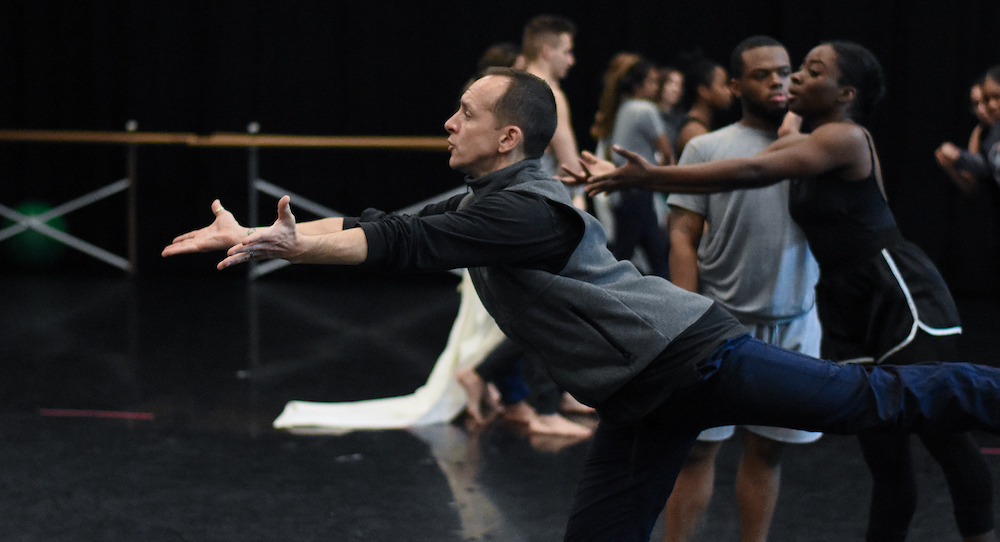
Dante Puleio rehearsing 'The Traitor' at the University of Florida.
Some stories — and thus, some dances — are just timeless. At the aforementioned time, there may very well be artistic choices within works from the by — fifty-fifty if they experience timeless — that don't align with values of the present. This tension was at play in the recent restaging of José Limón's The Traitor at the University of Florida (UF). The 20-minute work tells the biblical story of Judas Iscariot handing over Jesus of Nazareth to Roman authorities, leading to his crucifixion.
For the past 60-plus years, this work has been performed past an all-male person cast, notwithstanding this restaging was performed by men and women. In fact, the ii main characters — Judas and Jesus — were performed by women. To learn more about the restaging, Trip the light fantastic toe Informa speaks with Dante Puleio, visiting assistant professor of trip the light fantastic toe at University of Florida'south Schoolhouse of Theater and Dance and former Limón Dance Company member , and Elizabeth Johnson, assistant professor of dance in the S chool and creative director of trip the light fantastic toe 2019 (February 2019). Johnson was very excited about having someone who could restage archetype Limón works, newly on kinesthesia.
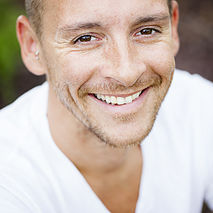
Dante Puleio.
Afterward Puleio arrived on campus and a possible Limón work was in play, Puleio suggested the UF students perform a "mixed gender" version of The Traitor . "I'm always looking to push myself and my artistic boundaries, and so presented with that challenge of doing this work with a mixed-gender cast, I said, 'I'm in!' " Puleio recounts. He has believed that it's time to "bring [ The Traitor ] out of the museum and to have women trip the light fantastic male person roles," he says.
The rehearsal process was daunting, he shares, but ultimately incredibly fulfilling. A primal factor making it a tough re-staging is a construction of "essentially eight twenty-minute solos," Puleio explains. Each dancer truly performs their ain office, their own character, inside the work. The students genuinely stepped upwards to the plate, however, he shares. "Y'all really saw the students abound through the process of rehearsing and performing this work, during and after — I could see them every bit unlike people and different artists," Puleio says.
Part of that was likely the mastery of Limón work , and the students but had to stride up, Puleio agrees. At the same fourth dimension, he "sort of threw the movement at them and didn't really requite them a run a risk to really remember about it, to get scared or overwhelmed," he shares. Information technology also could have been the deep conversations they had nearly the significant of the work — past and nowadays — and issues of identity around this functioning.
For instance, apart from women dancing male roles, a Latina educatee danced the role of Jesus and a Haitian-American student danced the part of Judas. In many ways, this casting challenged traditional notions of identity in the starring roles of this work, Limón himself having originated the Judas role .
Dante Puleio in rehearsal for 'The Traitor' at University of Florida.
To respect the race of the pupil who danced Judas,a certain prop was omitted for this restaging; traditionally, Judas appears to hang himself with an bodily rope at the end. "But we couldn't take a blackness torso hung by a noose," Johnson says assuredly. Puleio describes how during a rehearsal, he asked the students to think about whether or non they should utilize this traditional prop , and they'd discuss information technology the post-obit rehearsal. That they did, and , like Johnson, the students were fairly firmly thinking on the matter. T hey collectively decided to omit the rope and instead left the implication of the hanging to the choreography — a less literal and potentially incendiary concluding paradigm that fundamentally respected the narrative of the choreography.
Johnson also believes that staging this historic piece of work invited her theater colleagues in the Schoolhouse to see the trip the light fantastic toe surface area , and trip the light fantastic toe generally, with fresh perspective optics . Seeing the students dance a principal work with professional person level sensitivity and skill confirmed that their trip the light fantastic colleagues are indeed preparing dance students for the possibility of a professional life in trip the light fantastic. "That is what we're doing! " Johnson says with seriousness but also an air of a chuckle.
To the latter, theater professors could recognize that merely as their fine art form, dance works share historical weight and intellectual heft . "We got a lot of 'wow' [from people in the School ]," Johnson shares. Some other interesting aspect of lineage is that UF Lighting Professor Stan Kaye, who worked closely with Limón Lighting Designer Ted Sullivan, mentored UF freshman Amber Smith through lighting the work .
Given that weight, and the success of this restaging, where to from here? A fun fact is that in next flavour'due south performances of The Traitor , the Limón company will at present use the backdrop the t heatre design students made for the UF version of the work . Puleio wants to restage more historic Limón works, in conversation with the School and what's best for students in mind. Given what he, students and Johnson accomplished with Limón's The Traitor — making the onetime anew and bringing a timeless work fully into 2019 — the sky could but nigh be the limit.
Past Kathryn Boland of Trip the light fantastic toe Informa.

Source: https://www.danceinforma.com/2019/05/09/dancing-jose-limons-the-traitor-at-the-university-of-florida-the-old-made-anew/

Post a Comment for "Professor of Stan Kaye Describes Lighting as a Art Form"