Easy and Cool Drawing Lessons
Sometimes lesson planning comes downwards to the wire. Maybe your students went through a project much faster than expected, or you merely did not have the time to get ahead of things. We've all been at that place. It's not unheard of to scour the cyberspace and social media for ideas, only sometimes we still come up short. No fine art instructor is perfect, and we all need a lesson idea in a pinch from fourth dimension to fourth dimension! Nosotros don't want these activities to be fluff or busywork. Instead, we want them to help our students build skills and scaffold learning.
The next time you discover yourself in need of a terminal-minute activity or lesson, expect no further. The following 7 activities are easily adaptable for various course levels. They as well require minimal material prep and use supplies y'all probable have in your fine art room.
1. Personal Soda Can Characterization
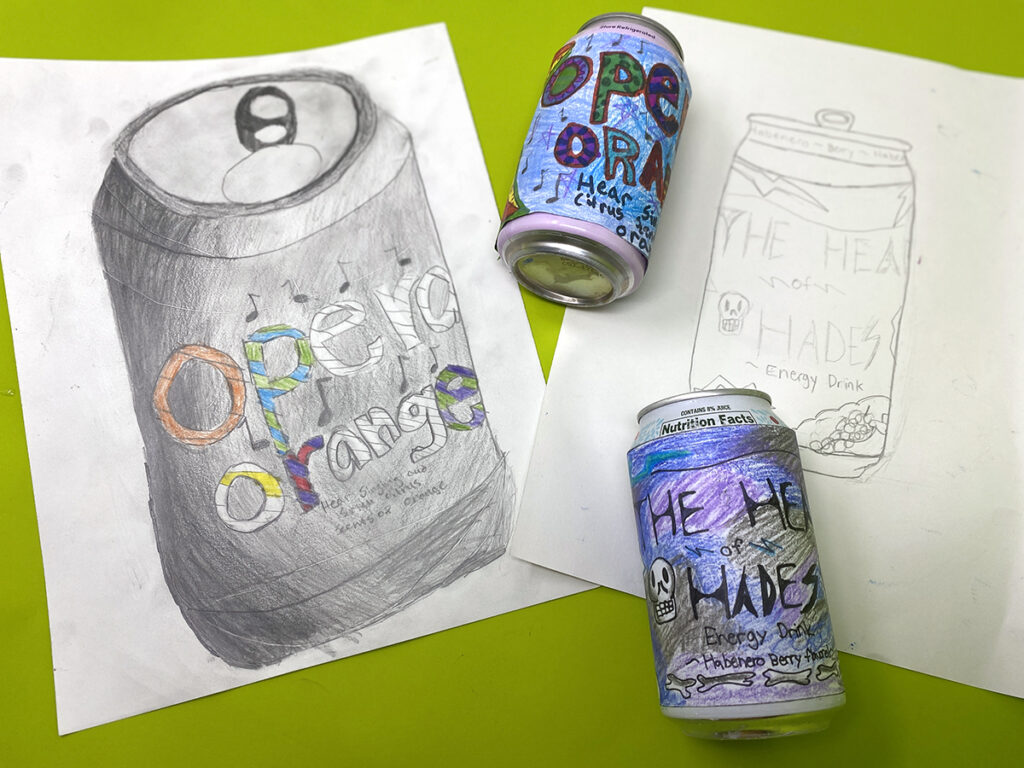
We live in a consumer globe where new beverages, food, processed, and snacks are constantly introduced to the market. Teachers and students experience product and brand design—often without even realizing it. Looking at the typography and imagery of dissimilar products tin spark interesting conversations with both elementary and secondary students.
I mode for students to explore the idea of consumerism through product pattern and advertising is by creating a personal beverage label. This will require students to brainstorm a brand and identity for their product by picking the flavor, color, and overall look. Utilise the handout beneath to get your students started planning their designs.
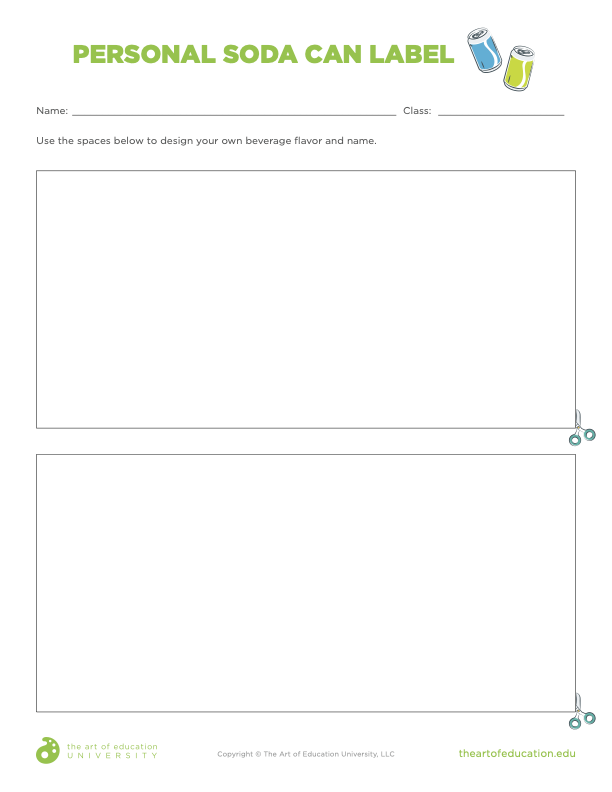
Download Now!
One time students have designed their labels, you tin take this activity a step further by attaching the design to an aluminum can. Have students participate in a reflection or critique activity. Ending the activity here might be appropriate for your elementary students, but you could take it a pace further for your middle and high schoolers. Have students use their aluminum tin can with a custom label for observational drawing. Commencement students often struggle with matching the text and typography on traditional soda cans. Using the label they initially created will assistance them build conviction in their drawing skills. After practicing observational drawing skills, students add shading to create the illusion of form. High school students tin can as well explore more than package design and advert elements.
Suggested materials: Paper, drawing materials, aluminum cans (optional)
Suggested form levels: Unproblematic, middle school, loftier school
2. Crushed Soda Can Cartoon
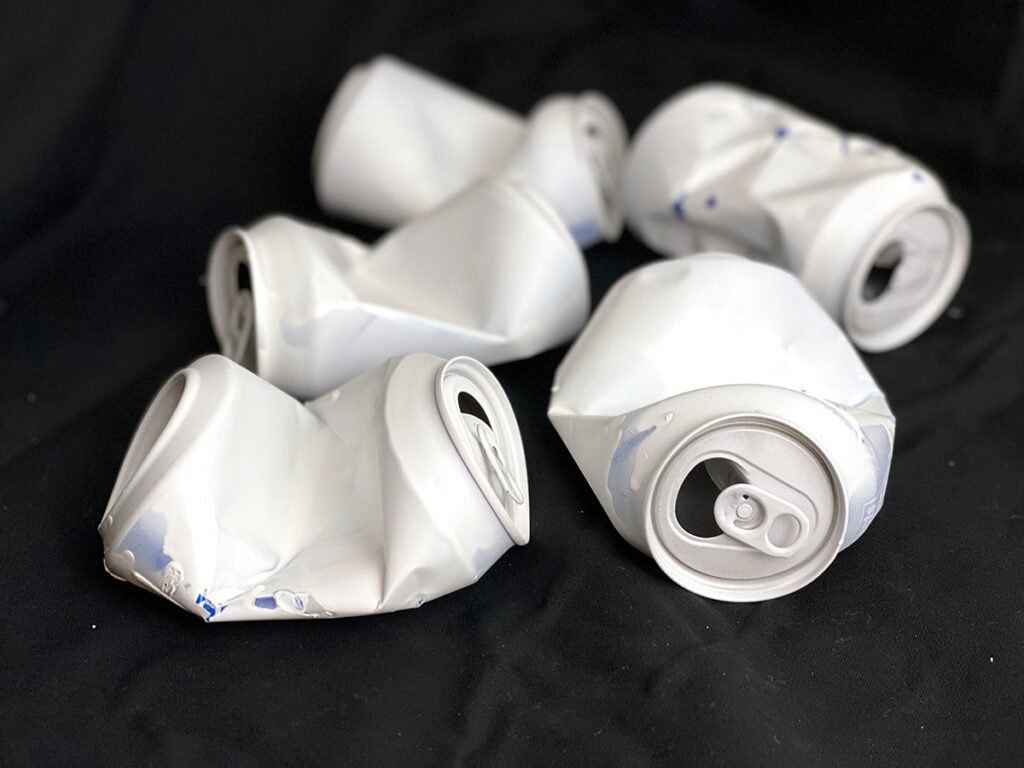
Another simple yet constructive way to recycle aluminum cans in your classroom is to crush them and utilise them for observational drawing. When students learn to draw, they eagerly desire to depict things every bit realistically every bit they tin can. Students often feel frustrated and disappointed when they aren't able to draw things perfectly. One way to reduce the pressure of realistic cartoon is to begin with an imperfect object. Crushing cans and spray painting them white can serve equally a beautiful and cost-effective style to teach basic drawing skills.
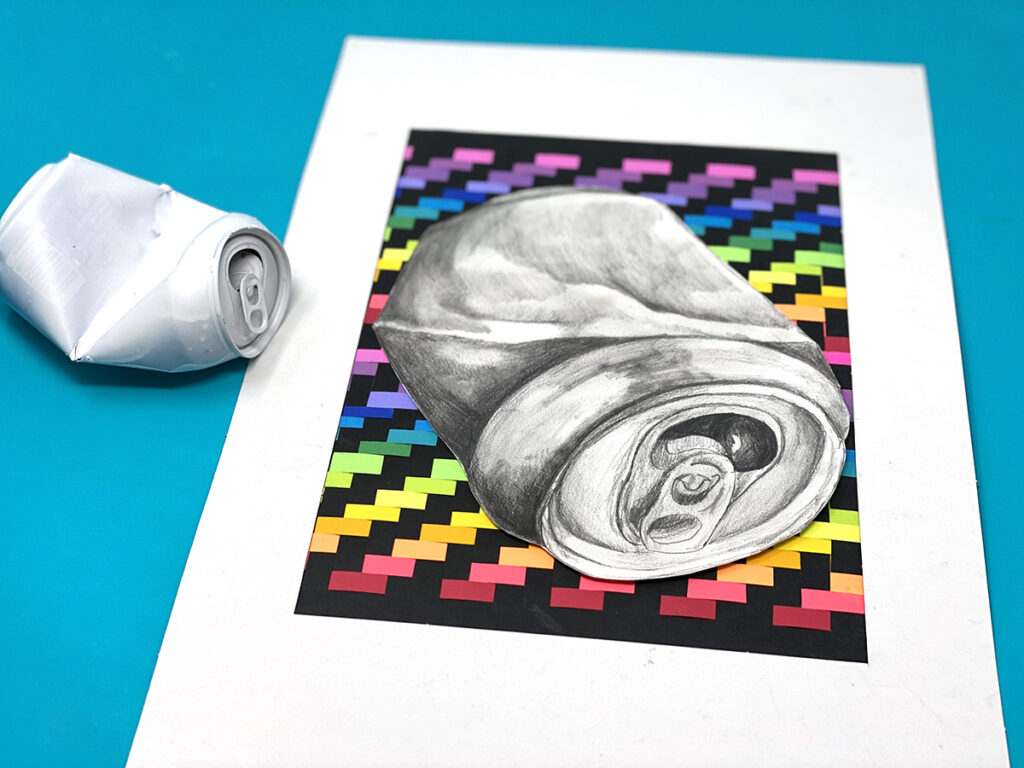
Students tin draw the cans from life or use a reference photograph. If they use a reference photo, you could introduce your students to the traditional filigree method or provide them with alternative ways of making a grid.
Comprehend the cans with white pigment so students tin can focus on the simplified shapes without worrying nearly labels or text. Strong lighting tin can also aid students to identify values hands. If you don't accept aluminum cans on hand merely still desire to attempt this activeness, use these images every bit references.
To adapt this lesson and take it fifty-fifty further for your secondary students, explore new and advanced techniques to create a background with contrast and emphasis. Students enquiry and experiment with a technique they have wanted to attempt. Provide them with a demonstration and sampling of some ideas to become them started.
Here are some exciting advanced techniques:
- Monoprinting
- Paper weaving
- Paper marbling
Suggested materials: Paper, drawing materials, aluminum cans
Suggested grade levels: Upper uncomplicated, eye school, loftier school
three. Ashley Mary-Inspired Organic Shape Painting
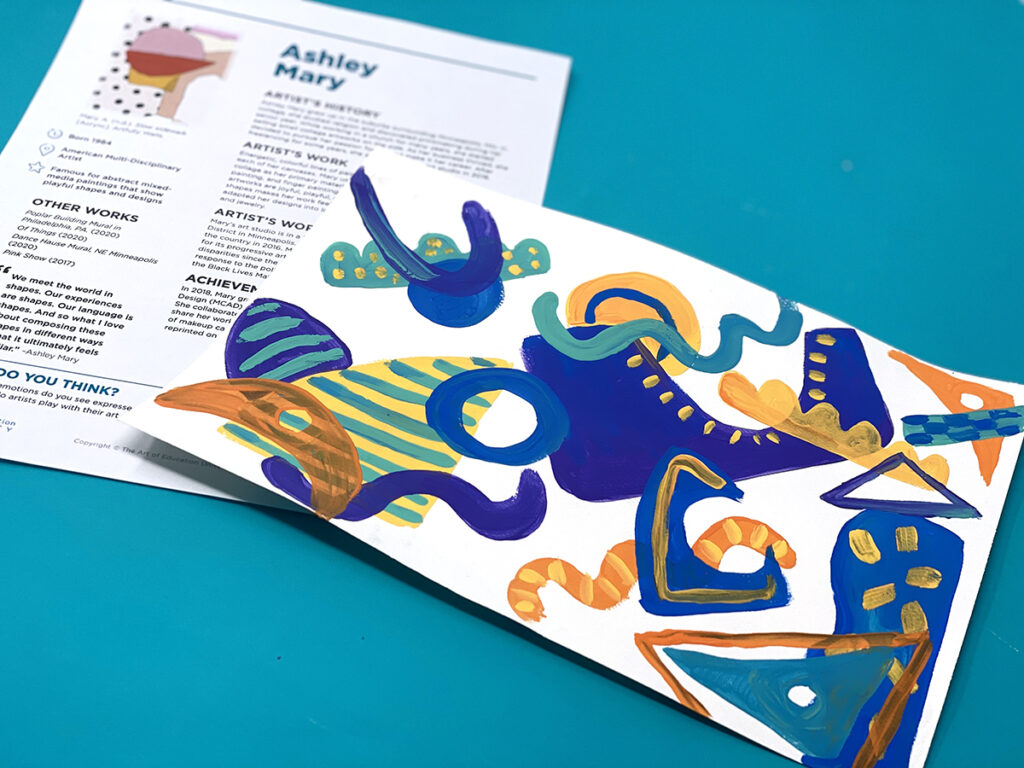
Exploring abstract and non-objective art can be an empowering experience for students. Yet, sometimes the freedom to create can go out them paralyzed or push them to overwork their pieces. One style to introduce students to proper painting techniques while exploring color, blueprint, and shape is to learn about the contemporary creative person Ashley Mary. Mary's playful paintings are reminiscent of the free-form collages of Matisse. Comparison Mary, a contemporary artist, with Matisse, a classical artist, can provide a foundation for inspiration and discussion. To learn more about Ashley Mary, download our complimentary FLEX Curriculum Artist Bio.
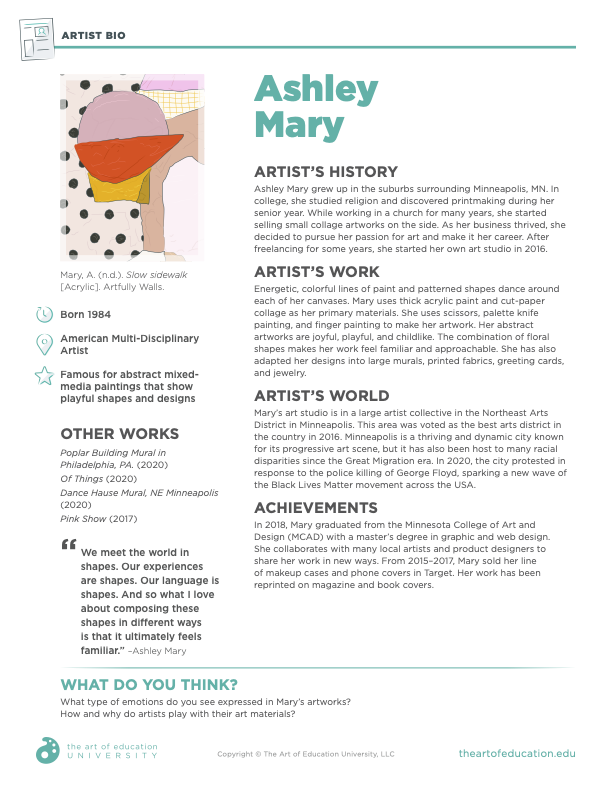
Download Now!
Before students brainstorm painting, have them choose a colour scheme. Encourage students to work with a limited palette to button them to brand more intentional color decisions. Students create shapes and patterns one paint layer at a time. If using watercolor, this tin can be a wonderful exploration of how transparent and translucent colors mix and layer. The free-form nature of this painting style also fosters intuitive thinking.
Suggested materials: Paper, acrylic or tempera pigment, watercolor
Suggested grade levels: Elementary, middle school
4. Water Droplet Drawing
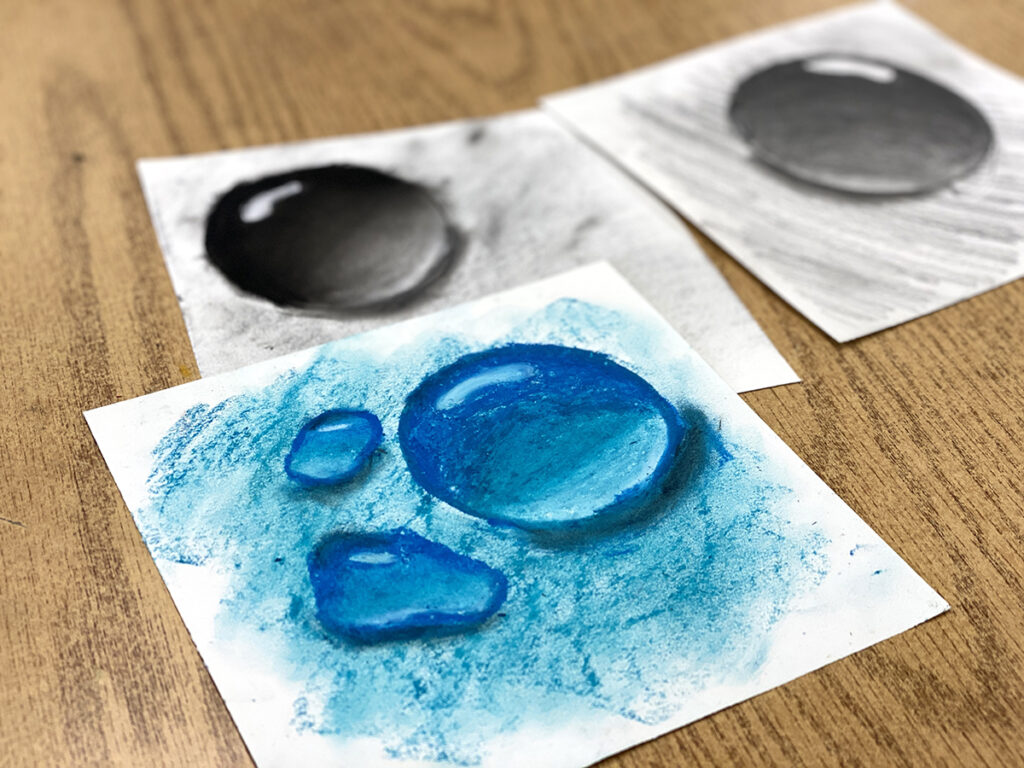
If you are looking for a skill-building activity to boost your students' confidence, this is it! Inspired by fine art teacher Jennifer Sell, this water droplet drawing activity is the perfect way to introduce students to shading and form at whatsoever age level. For all-time results, use a material that blends easily, similar graphite, charcoal, chalk, or oil pastel. Apply these videos to help guide your students as they navigate through the activity.
To suit this for your advanced learners, students create the same drawing with two different media. Compare and dissimilarity the procedure, medium characteristics, and end results.
Suggested materials: Paper, chalk, graphite, charcoal, or oil pastel
Suggested course levels: Upper simple, center school, high school
5. Textured Slump Mold Slab Bowl
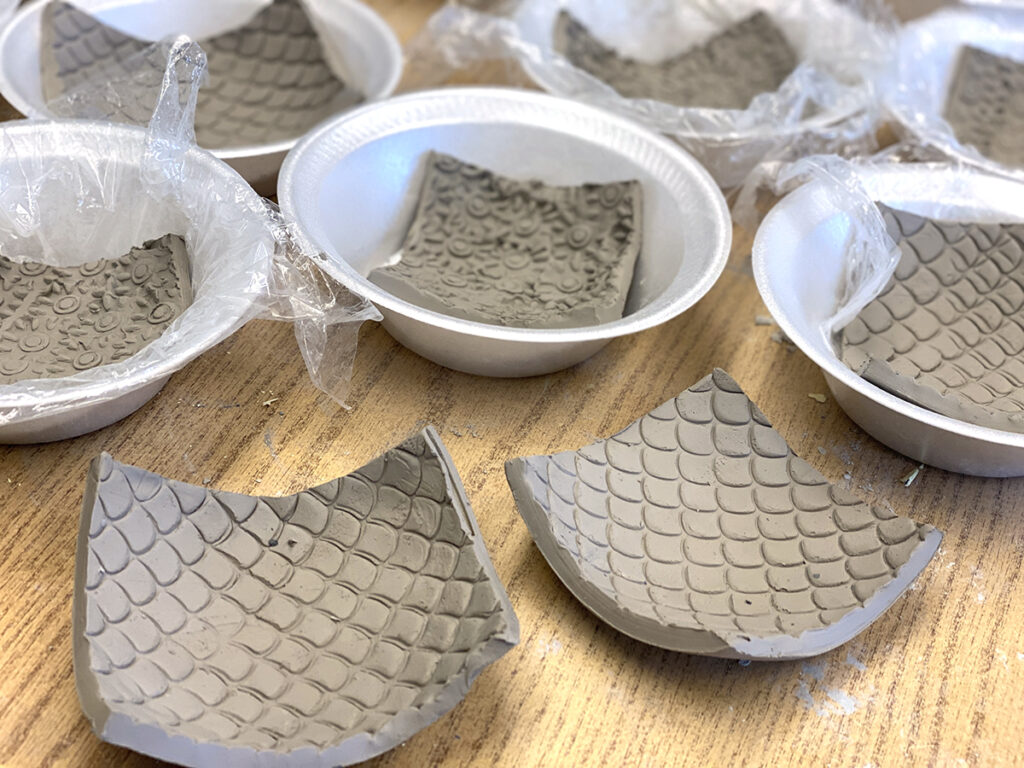
Are you in demand of a one-twenty-four hour period clay activity that requires minimal materials? Creating slump molds is a corking fashion to innovate or review making slabs with students. All you need is clay and a mold, similar a bowl, to press the clay inside. This idea also can introduce surface texture on clay. Students roll a slab, add together texture, then press into the slump mold. If you programme on doing more clay lessons with your students, this is a quick project for students to practice the glazing process.
Suggested materials: Clay, bowls for molds
Suggested grade levels: Unproblematic, eye school
6. Op Art Drawing
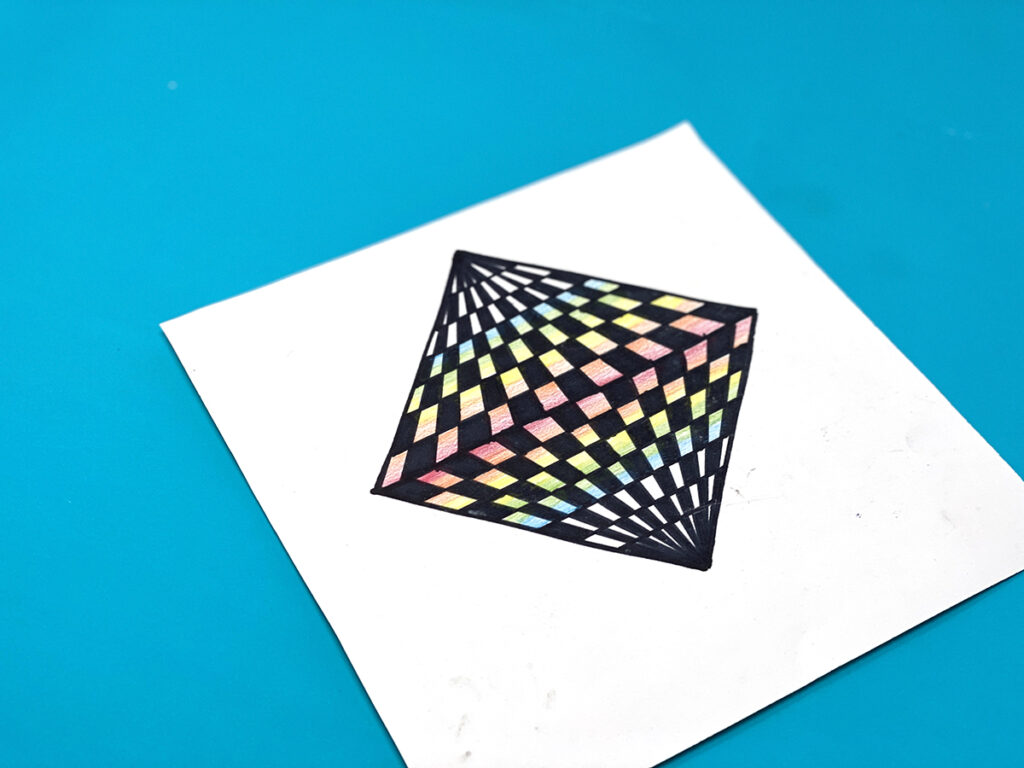
Optical illusions are always exciting for students, and learning how to make them is even better! Some op art designs crave more math and complexity, while others are on the simpler side. These op art sphere and cube designs are perfect every bit an introduction to your younger artists. Check out this video for a pace-by-footstep guide to create them.
If yous plan on doing more than circuitous op art activities with your avant-garde or high school students, these simple drawings volition make bang-up bellringer prompts. Connect several spheres and cubes to create more elaborate patterns and compositions. For more op art lesson ideas, bank check out the Connecting Op Art and Math FLEX Collection.
For a brief introduction to op fine art that yous can share with your students, check out the FLEX video below:
Suggested materials: Pencil, markers, ruler, paper
Suggested course levels: Uncomplicated, middle schoolhouse, high school
7. Colour Mixing Lines
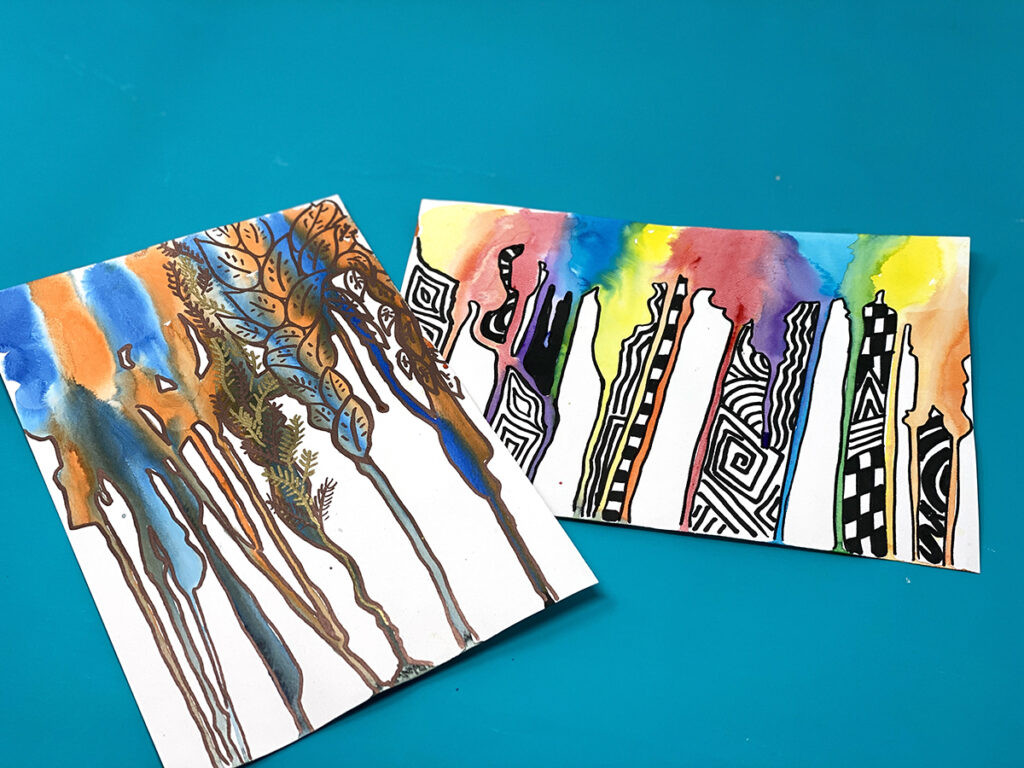
The process of color mixing never ceases to amaze students, no matter how many times they have experienced it. This action allows students to observe color mixing and explore creative drawing processes.
To commencement this project, students employ a water-based marker or watercolor paint. If students use markers, create shapes of color right side by side to or slightly overlapping each other. Prep an eyedropper filled with water or a paintbrush dipped in clean water. Stand up the painting up vertically and carefully driblet water on the newspaper. Watch as the water mixes with the color and drips downwardly the page together.
Employ the same method with watercolor paint with a wet-on-wet technique past painting the paper with water first. Add color with the paper held vertically.
Once the paint drips are dry, students identify the positive and negative shapes created by the drips. Students tin trace the shapes and make full in designated areas with line patterns.
Suggested materials: H2o, watercolor, markers, paper
Suggested form levels: Elementary, middle schoolhouse
Alexander Graham Bell said, "Earlier anything else, preparation is the key to success." With all that fine art teachers have to exercise daily, we understand the importance of preparation. Even so, there are just so many hours in the day, and sometimes we don't have enough time to become it all done! If you discover yourself behind, overwhelmed, or stuck, attempt one of these activities. They are sure to engage students from kickoff to finish, adaptable for all form levels, and you can easily tie them into your existing curriculum when you lot're in a pinch.
What's your get-to lesson when you lot are in a pinch?
How do you prep in advance for a last-minute activity?
Magazine articles and podcasts are opinions of professional education contributors and do not necessarily represent the position of the Art of Education University (AOEU) or its academic offerings. Contributors apply terms in the way they are virtually often talked about in the telescopic of their educational experiences.
Source: https://theartofeducation.edu/2021/11/19/nov-7-easy-art-lessons-for-when-youre-in-a-pinch/

Post a Comment for "Easy and Cool Drawing Lessons"